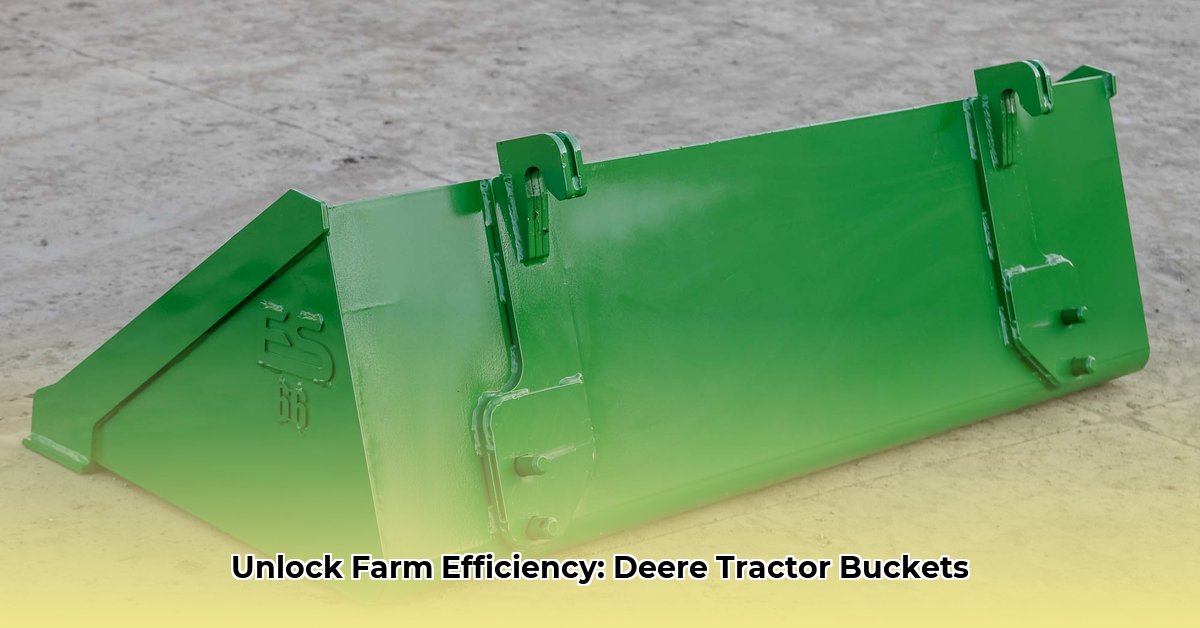
John Deere Tractor Buckets: Enhancing Farm Efficiency and Sustainability
Farming demands efficiency, and John Deere tractor buckets are designed to deliver just that. These aren't just about digging; they're about streamlining your entire operation, saving you time, money, and potentially even improving soil health. This guide explores how these buckets work, their practical application, and the overall impact on your farm's bottom line and sustainability efforts. Learn more about John Deere's commitment to sustainable technology with their electric tractors here.
Imagine this: You spend less time wrestling with attachments and more time tending to your crops. John Deere's Quik-Knect™ and Load-N-Go™ systems promise to drastically reduce attachment change time. But how significant are these time savings, and how do they translate to real-world benefits?
Real-World Impact: Beyond Time Savings
While precise fuel savings from reduced engine idling are farm-specific, the potential is significant. Less attachment-changing time directly translates to less engine run time, resulting in lower fuel bills. This directly impacts your operational costs. "Reduced downtime means more time spent on productive tasks, leading to a greater return on your time investment," says Dr. Emily Carter, Agricultural Engineer at the University of Illinois. This isn't just about fuel; it's about maximizing the value of your labor force. More time tending crops, less time fiddling with equipment is a win-win.
Furthermore, reducing time spent maneuvering heavy implements may lessen soil compaction – crucial for the long-term health and sustainability of your land. While quantifying this benefit requires site-specific research, minimizing compaction is a cornerstone of responsible farming practices.
The Investment Question: Cost vs. Benefits
The initial investment in John Deere's advanced bucket attachments is substantial. However, a thorough cost-benefit analysis is critical. This involves comparing the upfront investment against projected long-term savings in fuel, labor, and potential soil health benefits.
Making Informed Decisions: A Step-by-Step Cost-Benefit Analysis
To determine if John Deere tractor buckets are a worthwhile investment for your farm, follow these steps:
- Assess current costs: Estimate current expenses related to attachment changes, including labor and fuel consumption. Be meticulous – accuracy is paramount.
- Project potential savings: Estimate time savings with John Deere's systems, translating this into projected labor cost reductions and fuel savings. Be realistic; actual savings might vary.
- Factor in long-term advantages: Consider the impact on soil health. While difficult to precisely quantify, the long-term benefits of reduced compaction can be substantial – leading to reduced remediation costs in the future.
- Compare investment to projected returns: Compare the initial cost (annualized) to projected savings over a reasonable timeframe (e.g., 5-10 years) to determine your potential Return on Investment (ROI).
Consider this simplified table (replace with your farm's data):
| Factor | Current Annual Costs (Estimate) | Projected Annual Savings (Estimate) |
|---|---|---|
| Labor (Attachment Changes) | \$XXXX | \$XXXX |
| Fuel (Idling Time) | \$XXXX | \$XXXX |
| Soil Health Benefits | \$XXXX (avoided costs) | \$XXXX |
| John Deere Attachment Cost | \$XXXX (annualized) |
This structured approach will help you make a well-informed decision.
Looking Ahead: Sustainability and the Future of Farming
John Deere's focus on efficiency contributes to a more sustainable agricultural future. While further research is needed to fully understand the long-term environmental impact, these advancements point towards a more resilient and productive farming model. Remember, responsible farming requires a balanced approach where financial gains are aligned with environmental stewardship. John Deere's innovations aim towards this crucial balance.
How to Reduce Fuel Consumption Using John Deere Quick-Knect Attachments
John Deere's Quik-Knect PTO systems promise faster implement changes, but what's the impact on fuel efficiency? Let's examine the key factors.
Time, Money, and Fuel: The Interplay
Every minute of idle time translates to wasted fuel. Quik-Knect's rapid connection times drastically reduce idle time, leading to significantly lower fuel consumption. This is particularly beneficial when frequently changing implements. "The savings quickly add up when you're performing numerous implement changes throughout the day," states Mark Johnson, Farm Operations Manager at Green Valley Farms.
Beyond Speed: Optimized Implement Selection
Using the appropriate implement is crucial. Quik-Knect facilitates rapid switching to the right tool for each task, maximizing efficiency and minimizing fuel waste. This means using a cultivator for tilling, then switching quickly to a precise seeder - all while keeping your tractor running efficiently.
Quik-Knect Considerations: Costs and Compatibility
While the time savings are substantial, Quik-Knect isn't without its considerations. Installation requires expertise, compatibility isn't universal, and the initial investment must be weighed against long-term fuel savings. Thorough pre-purchase research is crucial.
Analyzing Fuel Usage: A Before-and-After Approach
To measure fuel savings, track fuel consumption for specific tasks before and after Quik-Knect installation. Compare the results over several weeks for accurate data.
Maintenance Matters: Ensuring Optimal Performance
Regular maintenance of your Quick-Knect system is essential for maximizing fuel efficiency and avoiding costly downtime.
Beyond Quik-Knect: Sustainable Farming Practices
Efficient equipment like Quick-Knect is just one aspect of sustainable farming. Implementing smart technological solutions, such as precision farming techniques, leads to better resource management and, in turn, improves fuel efficiency.
Key Takeaways:
- Quick-Knect significantly reduces implement changeover time, directly impacting fuel efficiency.
- Optimized implement selection, aided by easy swapping, minimizes fuel waste.
- The investment cost should be weighed against long-term fuel savings.
- Pre-purchase compatibility checks are essential.
- Before-and-after fuel usage tracking provides quantifiable results.